

BREAKING
NGX All-Share Index gains 412 points — MTN, Zenith, GTCo top movers CBN holds MPR at 27.5% — rate cuts possible Q3 2026 Dangote Refinery begins export of refined petroleum products SEC Nigeria approves new digital assets trading framework NGX All-Share Index gains 412 points — MTN, Zenith, GTCo top movers CBN holds MPR at 27.5% — rate cuts possible Q3 2026
LIVE
NGX 104,562 ▲0.42% | USD/NGN ₦1,614 ▼0.12% | BTC $84,210 ▲1.24% | DANGCEM ₦412 ▲1.10% | GTCO ₦58.45 ▲0.77% | MTNN ₦224.80 ▼0.31% | ZENITH ₦42.15 ▲0.60% | NGX 104,562 ▲0.42% | USD/NGN ₦1,614 ▼0.12% | BTC $84,210 ▲1.24%
₦90K
Weekly Giveaway — 5 Winners Every Week
1st: ₦50K  |  2nd–5th: ₦10K each  |  Be active to win
1,103Members
19,706Threads
26,424Posts
JOIN NOW

“$110 Oil… Falling Stocks… Rising Fear — Is This the Start of a Global Market Shock?”

  • Weekly Giveaway for our active users. N50,000 per Week. Do you want to contribute to this community? We are looking for contribution? What is hot right now? Sign up and get in on the ground floor of the newest, fastest growing Nigerian forum!

Eloisa

New Member
Mar 12, 2026
1
0
1
What happens when war meets the global economy?
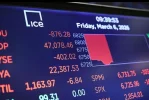
Markets are already answering that question — and the signals are not looking good
Stocks are dropping.
Oil prices are surging.
Confidence is weakening.

What we’re seeing is not just a temporary reaction — it’s the kind of uncertainty that can reshape market direction in the short to medium term. Smart investors are no longer asking “why is the market down?”
They’re asking “what comes next?”

A report from The Guardian highlights that the U.S. stock market selloff is intensifying as tensions involving Iran escalate.
Key drivers behind this market reaction include:
• Disruption fears around global oil supply
• Sharp rise in crude oil prices
• Declining consumer sentiment
• Growing inflation concerns

With critical supply routes like the Strait of Hormuz under threat, global markets are entering a phase of heightened volatility.

In times like this, markets don’t reward panic they reward positioning.

The real question is:
Are you reacting… or preparing?
 

Attachments

  • IMG_3093.webp
    IMG_3093.webp
    23.7 KB · Views: 0
What happens when war meets the global economy?
Markets are already answering that question — and the signals are not looking good
Stocks are dropping.
Oil prices are surging.
Confidence is weakening.

What we’re seeing is not just a temporary reaction — it’s the kind of uncertainty that can reshape market direction in the short to medium term. Smart investors are no longer asking “why is the market down?”
They’re asking “what comes next?”

A report from The Guardian highlights that the U.S. stock market selloff is intensifying as tensions involving Iran escalate.
Key drivers behind this market reaction include:
• Disruption fears around global oil supply
• Sharp rise in crude oil prices
• Declining consumer sentiment
• Growing inflation concerns

With critical supply routes like the Strait of Hormuz under threat, global markets are entering a phase of heightened volatility.

In times like this, markets don’t reward panic they reward positioning.

The real question is:
Are you reacting… or preparing?
War, especially around strategic corridors like the Strait of Hormuz, does not simply move oil prices. It alters the cost structure of the entire global economy.

Energy is an input into almost everything, so when it rises sharply, it quietly taxes consumption, compresses margins, and forces central banks into uncomfortable positions.

This is where most investors misread the moment.

They think in terms of direction. Up or down. Bull or bear. But experienced capital thinks in terms of transmission.

How does this shock travel?

First, oil rises. Then inflation expectations reawaken. Then interest rate expectations shift. Then liquidity tightens. Then risk assets reprice.

By the time stocks are falling, the real move has already happened beneath the surface.

The deeper layer is this: Geopolitical shocks expose fragility that already existed.

Markets do not break because of war. They break because they were already stretched, and war becomes the catalyst.

So the intelligent investor is not asking “will markets recover?”

They are asking: Where is capital hiding Where is pricing power strongest? Which assets benefit from disorder instead of stability?

Because in every crisis, capital does not disappear. It rotates.

Into energy.
Into defensives.
Into cash-flow resilient businesses.
Into regions less exposed to the shock.

And most importantly, into patience.

Right now, the opportunity is not in predicting the next headline. It is in understanding that volatility is a transfer mechanism.

From the unprepared to the prepared.

So no, this is not the time to react.

This is the time to quietly reposition, while others are still trying to understand what just happened.